
Our volunteer programme changes lives
Take a glimpse at how it works
Who do we need?
We recruit both South African and international healthcare professionals, including general practitioners and specialists, as well as allied professionals. Volunteers can contribute to any of the following areas:
Service: Involving direct or indirect patient care.
Some volunteers will be hands-on clinicians, others will be “backroomers” such as pathologists and radiologists.
Teaching: Skills transfer or more theoretical instruction.
From bedside one-on-ones to more formal ward rounds, from guidance on antibiotic use to interpretation of ultrasound results, weekly CPD sessions and more, we offer training to the full range of medical and allied professionals at the hospital and in the clinics.
Management support.
This support ranges from clinical guidance (for example, theatre protocols and equipment audits) to clinical criteria for referral. At the managerial level, this includes advice on, for example, queue management and reduced waiting times.
Service: Involving direct or indirect patient care.
Some volunteers will be hands-on clinicians, others will be “backroomers” such as pathologists and radiologists.
Teaching: Skills transfer or more theoretical instruction.
From bedside one-on-ones to more formal ward rounds, from guidance on antibiotic use to interpretation of ultrasound results, weekly CPD sessions and more, we offer training to the full range of medical and allied professionals at the hospital and in the clinics.
Management support.
This support ranges from clinical guidance (for example, theatre protocols and equipment audits) to clinical criteria for referral. At the managerial level, this includes advice on, for example, queue management and reduced waiting times.
Where you'll be working
Tshemba has an MOU with the Mpumalanga Department of Health that allows us to place healthcare professionals in outlying hospitals and clinics within the province. Volunteers are primarily placed at Tintswalo Hospital, a government-run hospital which serves the 300 000 plus residents of Acornhoek, Mpumalanga. Volunteers can also choose to help out at many of the satellite clinics in the area. Volunteers are asked to put in time to support clinical outreach programmes, local school health and education programmes as well as in community facilities.
Specialised services
Tshemba’s Eye Care Program brings accessible, quality eye care to rural communities in Mpumalanga through both community outreach and hospital-based services.
Vision Screening Outreach takes eye care into local schools, working alongside Department of Health school health nurses, optometry universities and optometrist groups to screen children, provide spectacles free of charge and ensure those requiring further care are treated or referred.
In partnership with Tintswalo Hospital, our fully equipped eye clinic and operating theatre provide comprehensive eye screening, treatment and specialist referrals, supported by volunteer ophthalmologists, optometrists and ophthalmic scrub nurses. The hospital programme has a strong focus on high-volume mass cataract camps, as well as strabismus surgery and other specialist eye-care services. Volunteers are supported and coordinated throughout their placement, from planning and preparation through to their clinical work and departure.
Together, these services help prevent avoidable vision loss, restore sight and improve quality of life for people who may otherwise struggle to access specialised eye care.
Vision Screening Outreach takes eye care into local schools, working alongside Department of Health school health nurses, optometry universities and optometrist groups to screen children, provide spectacles free of charge and ensure those requiring further care are treated or referred.
In partnership with Tintswalo Hospital, our fully equipped eye clinic and operating theatre provide comprehensive eye screening, treatment and specialist referrals, supported by volunteer ophthalmologists, optometrists and ophthalmic scrub nurses. The hospital programme has a strong focus on high-volume mass cataract camps, as well as strabismus surgery and other specialist eye-care services. Volunteers are supported and coordinated throughout their placement, from planning and preparation through to their clinical work and departure.
Together, these services help prevent avoidable vision loss, restore sight and improve quality of life for people who may otherwise struggle to access specialised eye care.


Download our Eye Clinic information document
Tshemba aims to strengthen women’s and adolescent health services. Our work currently focuses on cervical cancer prevention, family planning and contraception, adolescent sexual health, and support for vulnerable teenagers. Volunteers can get involved in projects such as improving cervical cancer screening rates and interpretation of results in the hospital and in the clinics, supporting family planning services, exploring barriers to care, or strengthening adolescent-friendly services. Volunteers can also support various outreach projects focusing on sexual health education in schools.
From specialist care to stronger health systems. Building on its longstanding partnership
with Tintswalo Hospital, Tshemba’s diabetes programme began as a clinically focused project
designed to establish Vutomi, a multidisciplinary specialist clinic that provides care for people
living with type 1 diabetes and complex type 2 diabetes. This project responded directly to a
pressing clinical need, owing to the concern for a rising burden of a growing number of patients
presenting with poorly controlled diabetes, oftentimes with associated, but preventable,
complications.
What started as a specialist clinical response has since evolved into a broader health-system
strengthening programme, anchored in four interconnected focus areas: coordinated clinical
care; primary healthcare capacity building through training, mentorship and skills transfer;
patient empowerment, self-management and peer support; and advocacy for equitable
access to essential diabetes resources and services.
Together, these focus areas enable the
programme to address immediate treatment and management needs while strengthening the
primary healthcare services where most diabetes care takes place. By linking specialist
expertise with stronger primary healthcare, Tshemba Foundation supports the systems needed
to sustain improved access to quality diabetes care, and paving a pathway to better long-term
health outcomes in underserved rural communities.
with Tintswalo Hospital, Tshemba’s diabetes programme began as a clinically focused project
designed to establish Vutomi, a multidisciplinary specialist clinic that provides care for people
living with type 1 diabetes and complex type 2 diabetes. This project responded directly to a
pressing clinical need, owing to the concern for a rising burden of a growing number of patients
presenting with poorly controlled diabetes, oftentimes with associated, but preventable,
complications.
What started as a specialist clinical response has since evolved into a broader health-system
strengthening programme, anchored in four interconnected focus areas: coordinated clinical
care; primary healthcare capacity building through training, mentorship and skills transfer;
patient empowerment, self-management and peer support; and advocacy for equitable
access to essential diabetes resources and services.
Together, these focus areas enable the
programme to address immediate treatment and management needs while strengthening the
primary healthcare services where most diabetes care takes place. By linking specialist
expertise with stronger primary healthcare, Tshemba Foundation supports the systems needed
to sustain improved access to quality diabetes care, and paving a pathway to better long-term
health outcomes in underserved rural communities.
Teaching and training are central to the volunteer role, both in the hospital and in the PHC clinics. Tshemba runs a number of regular training sessions including ‘Back to Basics’ training for nurses in four wards, weekly BLS training for all categories of hospital staff, simulation sessions in the ED, as well as contributions to weekly CPD sessions for doctors. Most volunteers are involved in one or more of these sessions. Teaching opportunities also include bedside teaching, ward-based case discussion, short presentations, skills workshops, theatre or clinic demonstrations, protocol reviews and informal mentorship.
There are many opportunitiesfor additional quality improvement projects according to volunteer skills and passion. All proposed initiatives need to be discussed with Tshemba’s project coordinator first, agreed upon with local teams, shaped around real service needs and designed to be useful after the volunteer leaves. Previous passion projects include patient-flow mapping, referral pathway improvements, audit tools, follow-up registers, clinical checklists, teaching resources, patient education materials and documentation improvements.Good projects start with listening, use simple data where possible, fit available resources, involve local owners and include a clear handover plan.
The volunteer experience
Hear first hand accounts from our former volunteers.
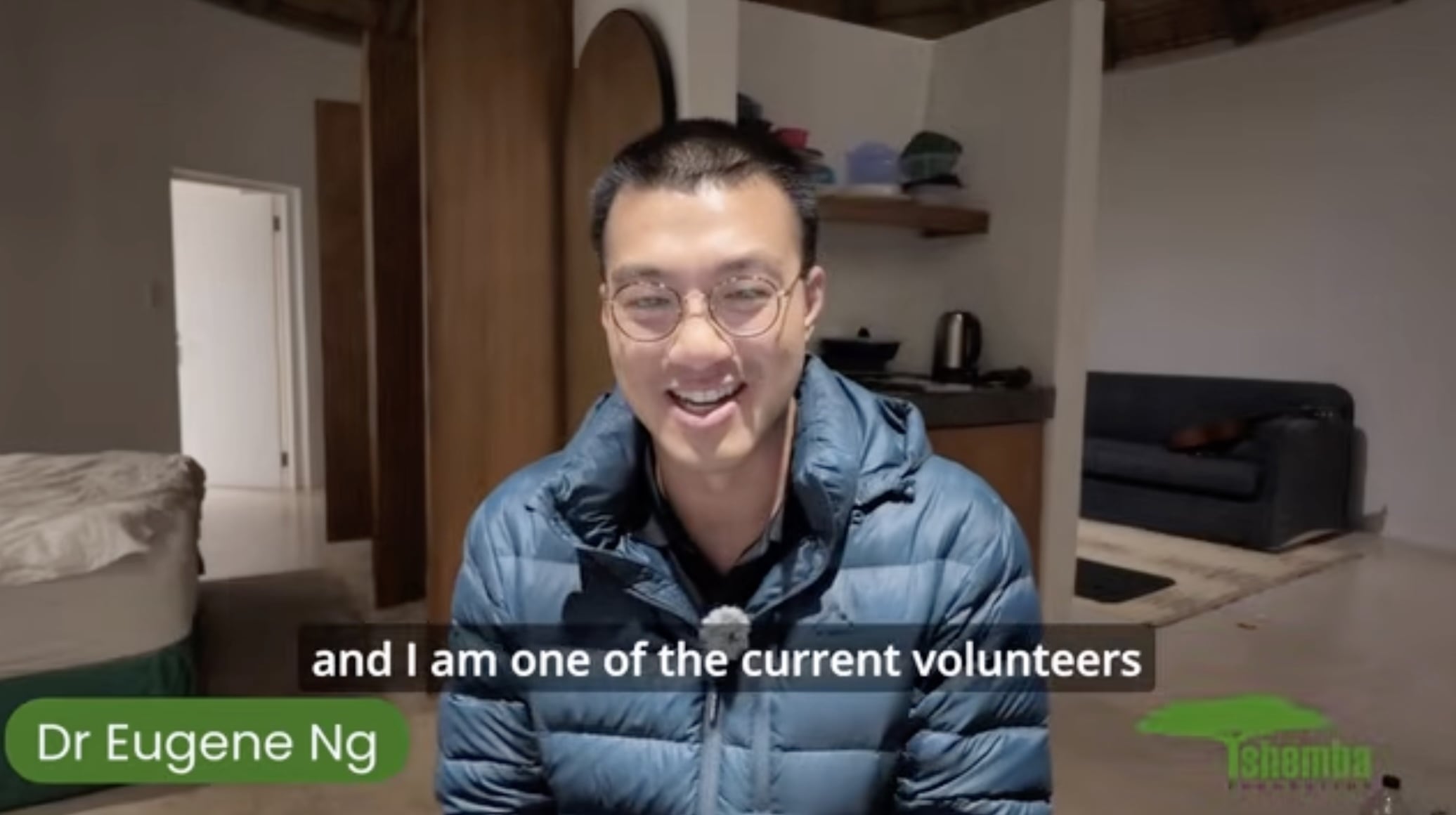


Watch more volunteer stories here
What your volunteering days could look like
.jpg)
Our primary goal is servicing less-fortunate communities in dire need of medical attention, but we also aspire to help doctors find their love for medicine again and pass their knowledge on to local staff members who are eager to learn. We ask volunteers to help us do this by:
Teaching and training healthcare providers already onsite
Creating tools and processes that encourage training, mentoring, and shadowing
Motivating local professionals to actively continue upskilling themselves
.jpg)
In our volunteers’ down time, they’re invited to take a breather at the bushveld refuge that is the Tshemba Volunteer Centre. To take in the sights, sounds and experiences of the magnificent environment that surrounds it. The Tshemba Volunteer Centre is located midway between the world-famous Kruger National Park and the world’s largest green canyon, the Blyde River Canyon, so there’s never a shortage of things to do and sights to see.