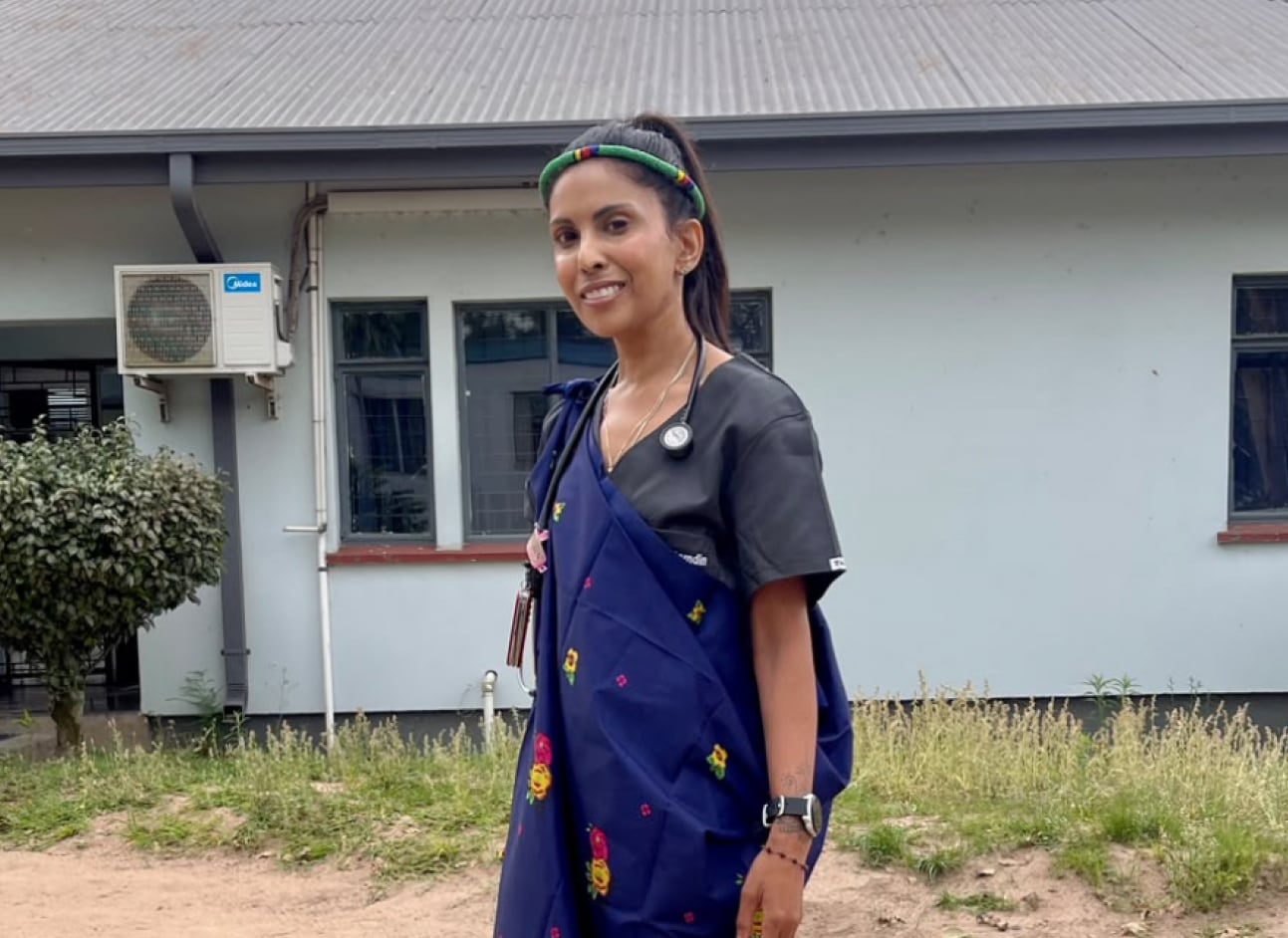

More Than Medicine: Lessons from Tintswalo's Neonatal Unit
When Dr Tanusha Ramdin arrived at Tintswalo Hospital for her recent neonatal and paediatric outreach visit, she was looking forward to sharing her specialist knowledge with the local healthcare team. What she hadn't anticipated was just how much she would learn from them in return. And how dedicated they remain despite the difficult circumstances in which they work.
As Head of the Neonatal and Paediatric Intensive Care Unit at Charlotte Maxeke Johannesburg Academic Hospital, Dr Ramdin brought valuable experience in caring for critically ill babies and children. Her visit, supported by the Tshemba Foundation as part of its collaboration with Tintsalo Hospital and Wits University, provided an opportunity to work alongside the Tintswalo team, exchange knowledge and explore practical ways to strengthen patient care.
Learning from Each Other
One of the things that struck Dr Ramdin most was the dedication and resourcefulness of Tintswalo's doctors and nurses.
Working in a busy rural hospital requires adaptability, and she was impressed by the team's ability to manage complex cases while making the most of the limited resources available to them.
Every ward round became an opportunity to exchange knowledge. Dr Ramdin shared her expertise in neonatal and paediatric intensive care, while the local team offered valuable insights into managing patients in their particular setting.
"The doctors who taught me more than I taught them," was how she described the experience in a letter she later wrote to colleagues considering rural outreach work.
Their enthusiasm for learning and willingness to share experiences made the visit particularly rewarding.
More Than Clinical Care
Alongside her clinical work and mentorship, Dr Ramdin spent time assisting with essential equipment, including a ventilator, a CPAP machine used to support babies' breathing, and a phototherapy unit used to treat newborn jaundice.
Maintaining specialist equipment is an important part of providing neonatal care, particularly in rural hospitals where technical support may not always be readily available.
Working with the team, Dr Ramdin helped identify equipment issues and explore practical solutions to support the unit's day-to-day work.
She also shared guidance on managing critically ill patients who require transfer to specialist facilities. These transfers can be complex, making careful preparation, clear communication and teamwork especially important.
For Dr Ramdin, the experience highlighted how valuable it can be to combine specialist knowledge with the practical experience of those working in rural healthcare every day.
The Value of Working Together
For the Tintswalo team, having access to specialist support was an opportunity to discuss difficult cases, learn new approaches and tackle some of the practical challenges they face in their daily work.
Dr Prudent Sibuyi, a Medical Officer in the Neonatal Unit, appreciated both Dr Ramdin's expertise and her willingness to get involved.
"Prof Ramdin is approachable, empathetic, fair, encouraging and very knowledgeable. We learnt a lot about patients and how to approach administrative challenges we face with getting resources to work on our wards. We enjoyed having her around."
She added that the nursing staff even wished she could have stayed for another two weeks.
For Dr Ramdin, the visit reinforced the importance of ongoing specialist outreach and mentorship in rural hospitals. She was particularly struck by the commitment of the Tintswalo staff and the opportunity to learn from one another.
In her letter to doctors considering similar outreach work, she wrote:
"You will be frustrated, exhausted, and tested in ways your training never anticipated. You will also witness resourcefulness, dedication, and courage — in your colleagues and your patients — that will change how you practise medicine forever."
For Tshemba, this is what makes specialist outreach so valuable. Alongside the care provided during each visit, there is an opportunity to share knowledge, build confidence and develop relationships with local healthcare teams. These are the things that can continue to make a difference long after a visiting specialist has returned home.
—
Content by Dr Tanusha Ramdin, Paediatrician, South Africa